
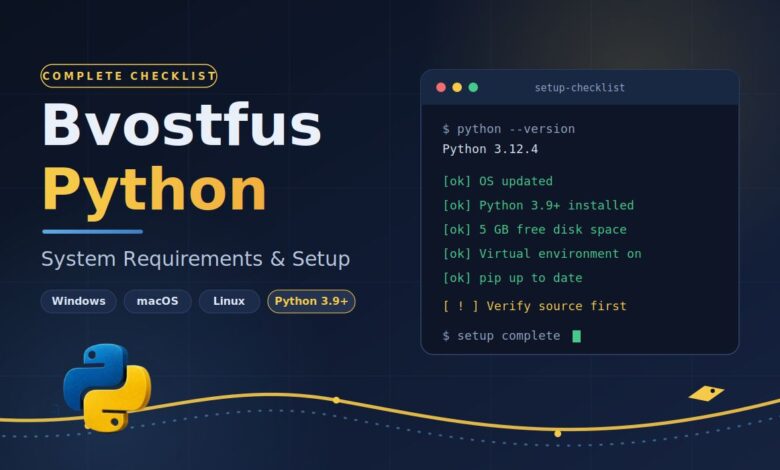
If you searched for Bvostfus Python setup information, you probably found a wall of confusing pages. One site calls it a framework. Another calls it a learning method. A third calls it brand-new software. When descriptions conflict this much, it becomes hard to know what your computer actually needs before you begin. This guide fixes that problem with one complete, practical checklist written in plain language.
Here is the honest starting point, and it matters. At this time, there is no verified official release, no official documentation, and no confirmed download page for a tool carrying this exact name. Because of that, the smartest move is to prepare a clean, correct Python environment first. A proper environment gets you ready for any legitimate Python tool, and it protects you from fake downloads that borrow trending names to spread harmful files.
What Is Bvostfus Python, Really?
The name Bvostfus Python appears across many blogs and discussion posts, usually described as a tool that makes Python projects cleaner and easier to manage. The problem is that these descriptions do not match each other. Real software always leaves a clear trail: an official website, version numbers, release notes, and a trusted download source. That trail is missing here. So treat any page offering exact install commands for this name with healthy caution.
That said, your search was not pointless. People looking up Bvostfus Python usually want the same three things. They want to know what their computer needs, set up Python the right way, and avoid frustrating errors. Every one of those goals is fully achievable. The requirements and steps below follow standard practice for modern Python tools, so this preparation will serve you well no matter which tool you end up installing.
Bvostfus Python System Requirements
Checking requirements takes five minutes, while repairing a broken setup can take hours, so always start here. Modern Python tools run smoothly on Windows 10 or 11, macOS 12 or newer, and current Linux systems such as Ubuntu 20.04 and above. All three platforms handle Python well. Just make sure your operating system is updated first, because very old systems sometimes reject newer Python installers. Windows users should choose the 64-bit installer, since it is the standard for current machines.
Python Version and Core Tools
Aim for Python 3.9 or higher, with versions 3.10 through 3.12 being the most comfortable choices today. Older versions such as 3.7 no longer receive security fixes, and many packages have stopped supporting them. You also need pip, the standard package manager, which comes bundled with every modern Python installer. You can confirm both in seconds by typing python –version and pip –version into your terminal or command prompt.
Memory, Storage, and Internet
You do not need a powerful machine for a basic setup. About 4 GB of RAM handles small scripts without trouble, while 8 GB feels comfortable for everyday development. Keep at least 5 GB of free disk space, because packages and project environments grow over time. Any processor from the last ten years will work fine. A stable internet connection also matters more than people expect, since package downloads pull files from online repositories, and a dropped connection can leave a half-installed package behind.
Step-by-Step Setup Process
Step 1: Install Python the Right Way
Download Python only from the official Python website, never from third-party download portals. On Windows, the most important moment comes early: check the box labeled “Add Python to PATH” before you click install. Missing that single checkbox causes most beginner setup failures. On macOS and Linux, your system may already include an older Python version. Leave that system copy alone and install a current version alongside it, which keeps your operating system stable.
Step 2: Confirm Your Version and Path
Open your terminal or command prompt and type python –version, or python3 –version on macOS and Linux. If a version number appears, your installation works. If you see a message saying the command is not recognized, your path setting needs fixing. The quickest cure is reinstalling Python with the path option checked. Once the version check passes, update your package manager by running python -m pip install –upgrade pip so you start with current tools.
Step 3: Create a Virtual Environment
A virtual environment is a private workspace for one project. It keeps that project’s packages separate from everything else on your computer, which prevents version conflicts before they ever start. Create one by running python -m venv myproject, then activate it using the command for your system. If anything goes wrong inside it, simply delete the folder and start fresh. No other habit in this guide saves more pain.
Step 4: Verify Before You Install Anything
This is the step most guides skip, and it is the one that truly protects you. Never install a package just because a blog post handed you a command. Unclaimed package names can be registered by bad actors who upload harmful files, hoping readers will type the command without thinking. Before installing anything tied to Bvostfus Python, look for an official developer page, real documentation, a version history, and an active user community. If you cannot find those signs, do not run the command. Wait until a verified source exists.
Your Complete Setup Checklist
Run through this quick list before and during setup, and check off each item as you go:
- Update your operating system to a current version
- Install Python 3.9 or higher from the official website
- Confirm python –version and pip –version both respond
- Free up at least 5 GB of disk space
- Create and activate a virtual environment for your project
- Verify the official source of any package before installing it
- Save your project’s packages in a requirements.txt file
If every box is checked, your environment is ready, stable, and safe.
Common Setup Problems and Simple Fixes
The most frequent problem is the “command not found” message, which almost always points to a path issue. Reinstalling Python with the path option enabled fixes it in minutes. Permission errors come next, especially on shared or work computers. Resist the urge to force installations with administrator rights across your whole system. Installing inside an activated virtual environment avoids most permission problems entirely, because everything stays inside a folder you own.
Dependency conflicts are the third common headache. They happen when two packages demand different versions of the same library. The clean fix is a fresh virtual environment plus a requirements.txt file that records exact working versions. One more situation deserves care: if your antivirus flags a downloaded file connected to this name, take the warning seriously. Given the lack of any verified official release, deleting that file is the wise choice.
Keeping Your Setup Safe and Updated
Update Python and pip on a regular schedule rather than waiting for something to break. Before any big update, save a copy of your requirements.txt file so you can roll back if a new version misbehaves. Never download “updated versions” of tools from file-sharing pages or unfamiliar blogs. If an official Bvostfus Python release ever appears, it will arrive with a real website and real documentation, and the environment you built today will have you running it within minutes.
Final Thoughts
The honest summary is simple. Bvostfus Python currently has no verified official release, and the conflicting descriptions online prove that no one source can be trusted for exact commands. What you can trust is a clean, standard Python setup: a current operating system, Python 3.9 or newer, a working package manager, an isolated virtual environment, and a firm habit of verifying every download source. That preparation is never wasted. It works for every real Python tool, prevents the most common errors, and keeps your computer safe while others rush in blindly. Careful setup today means calm, productive coding tomorrow.
Frequently Asked Questions (FAQs)
1. What is Bvostfus Python?
It is a name that appears in many online articles with conflicting descriptions. No verified official software currently exists under this exact name, so treat unofficial claims carefully.
2. Is Bvostfus Python an official tool I can download?
Not at this time. There is no official website, documentation, or confirmed release. Any page offering a direct download should be treated with strong caution until a verified source appears.
3. What Python version should I install for this setup?
Install Python 3.9 or higher, with 3.10 to 3.12 being the most reliable choices today. Older versions no longer receive security fixes and cause package compatibility problems.
4. Does this setup work on Windows, macOS, and Linux?
Yes. The full checklist applies to Windows 10 and 11, macOS 12 or newer, and current Linux systems. Only small command differences exist between the platforms.
5. How much RAM and storage do I need?
About 4 GB of RAM works for small scripts, while 8 GB is comfortable for regular development. Keep at least 5 GB of free disk space for packages and environments.
6. Do I really need a virtual environment?
Yes, and it is the single best habit in this guide. A virtual environment keeps each project’s packages separate, which prevents version conflicts and makes broken setups easy to reset.
7. Why should I verify a package before installing it?
Unclaimed package names can be registered by bad actors who upload harmful files. Verifying the official source first protects your computer from malware disguised as a trending tool.
8. What does the “command not found” error mean?
It usually means Python was installed without the path option enabled, so your terminal cannot locate it. Reinstalling Python with “Add Python to PATH” checked fixes it quickly.
9. How do I fix dependency conflicts between packages?
Create a fresh virtual environment and reinstall your packages there, using a requirements.txt file to record exact versions. This resolves most conflicts without touching your main system.
10. Is this setup process safe for complete beginners?
Yes. Every step uses official tools, plain commands, and safe habits. Beginners who follow the checklist in order avoid nearly all the common installation mistakes.
11. How often should I update Python and my tools?
Check for updates every month or two, and always save your requirements.txt file before major upgrades. Regular small updates are far safer than rare giant ones.
12. What should I do until an official release appears?
Build and practice with your clean Python environment, and explore established tools with real documentation. If a verified release ever arrives, your prepared system will handle it immediately.
For more< Afruimwagens for Hotels & Commercial Kitchens: How to Choose Right