

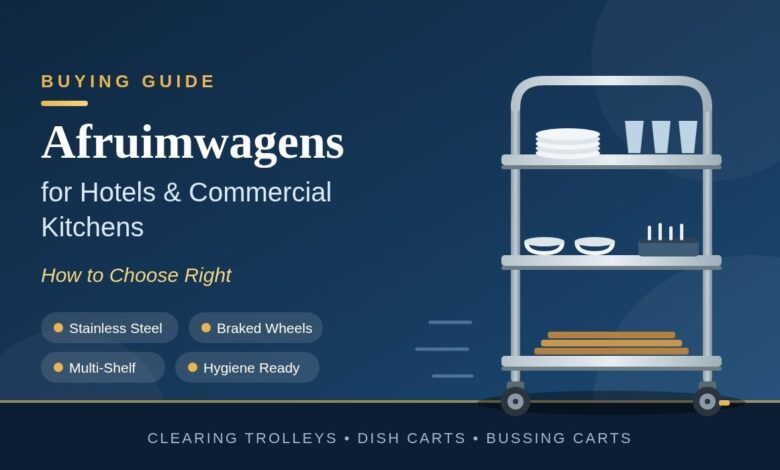
Walk into any busy hotel restaurant during breakfast service and you will see the same challenge everywhere. Plates pile up, glasses crowd the tables, and staff members rush back and forth trying to keep the dining area clean. This is exactly where afruimwagens prove their worth. These specialized clearing trolleys carry stacks of dishes, trays, cutlery, and glassware from dining rooms to the dishwashing area in a single trip, saving time and protecting your team from injury.
The word afruimwagens comes from Dutch, where it simply means “clearing carts.” In the United States and the United Kingdom, people often call them bussing carts, dish trolleys, or clearing trolleys. Whatever name you use, the purpose stays the same. They keep hotels, restaurants, and commercial kitchens running smoothly. This guide explains what these trolleys do, the different types available, and how to pick the right one for your business without wasting money.
What Are Afruimwagens and Why Do They Matter?
An afruimwagen is a rolling cart with two, three, or sometimes four shelves. Staff members load it with used plates, cups, cutlery, and food waste, then wheel everything to the kitchen at once. Instead of a server carrying three plates per trip and making six trips per table, one trolley can clear an entire dining section in minutes. That difference adds up fast during a busy dinner rush or a hotel banquet with hundreds of guests.
The benefits go beyond speed. Carrying heavy stacks of dishes by hand is one of the most common causes of workplace strain in hospitality. A dropped tray of glasses is dangerous for staff and embarrassing in front of guests. When everything moves on a stable, wheeled cart, accidents drop sharply. Guests also notice the difference. A dining room where dirty dishes disappear quickly and quietly feels more professional and more inviting, which directly affects reviews and repeat visits.
Main Types of Afruimwagens
The most common type is the open trolley with two or three flat shelves. These models work well in restaurants, hotels, cafés, and banquet halls. Staff can stack plates on one level, place glasses on another, and keep cutlery bins on the top shelf. A three-shelf model gives you the most flexible use of space, while a compact two-shelf version fits better in small bistros where aisles between tables are narrow.
Many of these trolleys also come with removable bins for cutlery and food waste. This small feature makes a big difference in practice. Servers can scrape leftovers and drop knives and forks into separate containers right at the table, so everything arrives at the dishwashing station already sorted. That cuts the workload in the back of house and speeds up the entire cleaning cycle.
Glass Rack and Tray Collection Trolleys
Some clearing trolleys are built for specific jobs. Glass rack trolleys hold standard dishwasher racks, so fragile glassware travels safely from the bar or dining room straight into the dishwasher without extra handling. Every time a glass is touched, there is a chance it breaks. These trolleys reduce that handling to almost zero, which saves real money over a year of service.
Tray collection trolleys are common in hotel breakfast rooms, staff canteens, and self-service restaurants. Guests slide their own trays into slotted rails, and the cart holds everything neatly until staff wheel it away. This style reduces labor costs because customers do part of the clearing themselves, and it keeps tables free for the next guests much faster.
Enclosed and Heavy-Duty Models
Enclosed afruimwagens have covered sides or doors that hide dirty dishes from view. Upscale hotels prefer these because guests never see stacks of used plates rolling through the lobby or corridor. Enclosed models are also popular in hospitals and care homes, where covered transport helps prevent cross-contamination between clean and used items.
Heavy-duty industrial models are built for large banquet operations, conference centers, and institutional kitchens. They use reinforced frames, thicker shelves, and larger wheels that can carry loads of 200 kilograms or more. If your hotel regularly hosts weddings or events with several hundred covers, a heavy-duty trolley is worth the extra cost because a standard model will wear out quickly under that pressure.
Choosing the Right Material
Stainless steel is the top choice for commercial kitchens, and for good reason. It resists rust, handles hot water and strong cleaning chemicals, and does not absorb odors or stains. Health inspectors like it because smooth welded surfaces leave nowhere for bacteria to hide. A well-made stainless steel trolley can last eight to ten years with basic care, which makes it the best long-term value for any hotel or restaurant with heavy daily use.
The trade-off is weight and noise. Steel trolleys are heavier to push when fully loaded, and plates rattle more against metal shelves. Many manufacturers now solve the noise problem with rubber shelf mats or sound-dampening coatings, so ask about these options when comparing models. The extra upfront cost is small compared to the comfort it brings during quiet evening service.
Plastic and Hybrid Options
High-quality plastic trolleys, usually made from polypropylene, are lighter, quieter, and cheaper than steel. They work well in smaller cafés, school cafeterias, and casual dining spots where loads stay moderate. Modern plastics resist stains and scratches better than older versions, and the material naturally absorbs vibration, so dishes make less noise during transport across the dining floor.
Hybrid designs combine a steel frame with plastic shelves. This gives you the strength of metal where it matters most and the light weight and quiet operation of plastic where dishes actually sit. For many mid-sized hotels and restaurants, a hybrid trolley hits the sweet spot between price, durability, and everyday comfort for staff.
Key Features That Actually Matter
Before you compare prices, focus on the features that affect daily use the most. These are the details that separate a trolley your team loves from one that sits unused in a corner:
- Wheels with brakes: Look for smooth-rolling swivel casters with at least two locking brakes so the cart stays put while loading.
- Load capacity: Check the maximum weight rating and choose slightly more capacity than your busiest service needs.
- Shelf height and spacing: Make sure tall items like pitchers and stacked plates fit between levels.
- Ergonomic handles: A proper push handle protects wrists and backs during long shifts.
- Rounded corners and bumpers: These protect walls, door frames, and furniture in tight corridors.
Wheel quality deserves special attention because it is the first thing that fails on cheap trolleys. Soft rubber casters glide quietly over tile, wood, and carpet without leaving marks, while hard plastic wheels get loud and can damage flooring. If your hotel has carpeted corridors between the restaurant and the kitchen, larger wheels of at least 100 millimeters will roll over thresholds and carpet edges far more easily than small ones.
Matching the Trolley to Your Business Size
A small bistro with twenty seats has completely different needs than a resort hotel with three restaurants and a banquet hall. Start by counting how many covers you serve during your busiest hour and how far staff must travel between the dining area and the dishwashing station. A compact two-shelf trolley handles a small café comfortably, while a busy hotel restaurant usually needs at least two three-shelf models so one can be loaded while the other is being emptied.
Think about your floor plan as well. Measure your narrowest doorway, your tightest aisle, and any elevator your staff will use. A trolley that cannot turn a corner in your service corridor becomes an expensive mistake, no matter how well it is built. Also consider where the cart will be stored during off-hours. Foldable models exist for businesses that only need clearing trolleys for weekend events or seasonal service.
Price Ranges and What to Expect
Budget models typically cost between 80 and 150 euros, or roughly 90 to 170 dollars. These are usually plastic or light-gauge metal and suit low-volume settings, but expect a shorter lifespan of two to three years under daily use. Mid-range trolleys between 150 and 300 euros offer stainless steel or heavy-duty plastic construction, quality braked casters, and multiple shelves. Most restaurants and mid-sized hotels operate happily in this range and get four to six years of reliable service.
Premium commercial models start around 300 euros and can exceed 500 euros for reinforced banquet-grade carts. These bring industrial wheels, welded frames, modular add-ons, and longer warranties, and they routinely last eight to ten years. For seasonal businesses or one-time events, rental is also an option, with daily rates usually falling between 10 and 25 euros depending on the model. When comparing prices, always calculate cost per year of expected use rather than the sticker price alone.
Care and Maintenance Tips
Even the best trolley fails early without basic care. Wipe down all shelves with warm soapy water or a food-safe sanitizer after every service, and give the whole cart a deep clean weekly. Pay attention to corners, welds, and the underside of shelves where grease and food residue collect. Stainless steel models can handle stronger cleaning agents, which is another reason they dominate in professional kitchens.
Check the wheels every week. Hair, string, and food debris wrap around caster axles and slowly grind them down. A quick inspection and a drop of lubricant keep everything rolling smoothly. Tighten loose bolts monthly and test the brakes regularly. These five minutes of attention can add years to the working life of your equipment and prevent the sudden breakdowns that always seem to happen during the busiest service of the week.
Final Thoughts
Afruimwagens may not be the most glamorous purchase for your hotel or commercial kitchen, but few pieces of equipment deliver a faster return. The right clearing trolley saves hundreds of staff hours every year, reduces breakage, protects your team from injury, and keeps your dining areas looking clean and professional at all times. Guests may never notice the cart itself, but they absolutely notice the calm, tidy atmosphere it creates.
When choosing, keep the decision simple. Match the size and shelf count to your daily volume, pick stainless steel for heavy use or quality plastic for lighter settings, insist on good braked wheels, and buy slightly more capacity than you think you need. A carefully chosen trolley will serve your business quietly and reliably for many years, making it one of the smartest small investments any hospitality operation can make.
Frequently Asked Questions (FAQs)
What does the word afruimwagens actually mean?
It is a Dutch term that translates to “clearing carts” or “clearing trolleys.” In English-speaking countries, the same equipment is usually called a bussing cart, dish trolley, or clearing trolley.
Are afruimwagens only used in restaurants?
No, they are used in hotels, hospitals, schools, care homes, event venues, and corporate cafeterias. Any place that serves food and needs to move used dishes efficiently can benefit from one.
Which material is best for a clearing trolley?
Stainless steel is the best choice for heavy daily use because it is durable, hygienic, and easy to sanitize. High-quality plastic works well for lighter use in smaller cafés or canteens.
How much does a good afruimwagen cost?
Budget models start around 80 to 150 euros, mid-range options run 150 to 300 euros, and premium commercial carts can cost 300 euros or more. Most restaurants find the mid-range perfectly sufficient.
How many shelves should my trolley have?
Two shelves suit small cafés, while three shelves offer the best balance of capacity and maneuverability for most restaurants and hotels. Large banquet operations often prefer four-tier or heavy-duty models.
Do I need wheels with brakes?
Yes, braked casters are essential. They keep the trolley stable while staff load heavy stacks of plates and prevent it from rolling away on sloped or uneven floors.
How do I clean a clearing trolley properly?
Wipe all surfaces with warm soapy water or a food-safe sanitizer after each service. Do a deeper weekly clean of corners, welds, and wheels to remove trapped grease and debris.
Can these trolleys damage my flooring?
Cheap hard-plastic wheels can scratch wood and leave marks on tile. Choose soft rubber casters, which roll quietly and protect all common floor types including carpet.
What size trolley fits a small restaurant?
Measure your narrowest aisle and doorway first. A compact two-shelf model around 80 to 90 centimeters long usually fits comfortably in small dining rooms without disturbing guests.
How long does a quality afruimwagen last?
A mid-range trolley typically lasts four to six years with daily use, while a premium stainless steel model can serve reliably for eight to ten years with regular maintenance.
Is it better to buy or rent a clearing trolley?
Buying makes sense for any business with regular daily service. Renting, at roughly 10 to 25 euros per day, suits seasonal operations or one-time events like weddings and festivals.
Can guests see dirty dishes on the trolley?
On open models, yes, which is why upscale hotels often choose enclosed trolleys with covered sides or doors. These hide used dishes completely while moving through guest areas.
For more< VocalNewsMedia Com: Inside the Popular Online News and Content Platform